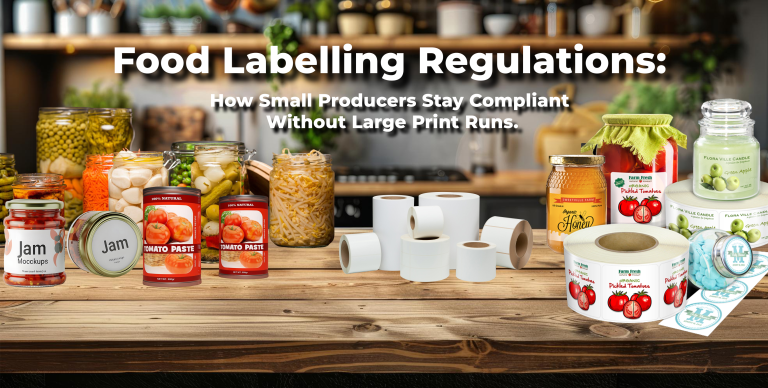
Food Labelling Compliance in South Africa: How Small Producers Avoid Costly Reprints
Food labelling compliance is a constant challenge for small producers. With recipes evolving, ingredients changing, and new allergen information needing to be disclosed, labels often require frequent updates. Packaging sizes may also change, and regulations around nutritional information or ingredient declarations can be updated without much notice.
For businesses that rely on pre-printed labels, these changes can quickly become expensive. Large batches of labels may become outdated before they are even used, forcing companies to discard perfectly good stock. This not only increases costs but can also create delays when new labels need to be designed, approved, and printed.
As a result, many small manufacturers find themselves dealing with unnecessary waste, slower product turnaround times, and the ongoing pressure of ensuring every product leaving their facility is correctly labelled and compliant with current regulations.
Click Here To Read More
The Challenge with Traditional Pre-Printed Labels
Food products often change more frequently than expected. Recipes are refined, ingredients are replaced, allergens may need to be declared, and packaging sizes can change.
For businesses using large quantities of pre-printed labels, these changes can create several problems.
Label Waste
When a recipe or ingredient list changes, existing labels may no longer be usable.
Compliance Risks
Using outdated labels can lead to incorrect ingredient lists, missing allergen information, or inaccurate shelf-life details.
Slower Product Innovation
Launching new flavours, seasonal products, or limited batches can become complicated when label changes require costly reprints.
Storage and Organisation Issues
Managing multiple label versions for different products, flavours, and languages can quickly become difficult.
How On-Demand Color Label Printing Helps
On-demand color label printing allows businesses to print labels only when they are needed, giving producers far more flexibility.
Instead of ordering thousands of labels at once, businesses can produce smaller quantities as required. This ensures labels always reflect the most current product information.
Key benefits include:
Instant label updates when ingredients or allergen information change
Consistent color quality for branding, nutritional panels, and product icons
Multi-language label options for the South African market
Reduced label waste by printing only what is needed
Improved traceability with batch numbers and production dates
A Practical Example
Imagine a small sauce producer updating a recipe. A new ingredient is introduced, which means the allergen information on the label must also change.
With pre-printed labels, this may result in wasted stock and delays while waiting for new labels to arrive.
With on-demand printing, the label design can be updated immediately and new labels printed as needed—allowing production and distribution to continue without interruption.
Final Thoughts
Food labelling compliance is an ongoing responsibility. Recipes change, suppliers evolve, and regulations are updated over time.
On-demand color label printing provides food producers with a flexible and efficient way to keep labels accurate while reducing waste and simplifying the labelling process.
Need Advice on the Right Label Printer?
Choosing the right on-demand color label printer depends on factors such as label volumes, materials, and packaging requirements.
If you are unsure which solution would best suit your application, contact Intellistor. A label printing specialist can help you find the right system to keep your labelling accurate, compliant, and efficient.